Proposal vision for VIR
A stronger operating base for VIR's knowledge work.
VIR has built its reputation through specialist expertise, trusted client relationships, and consistent delivery of high-quality work.
This proposal is not about replacing that judgement with automation or tools. It is about strengthening how VIR captures, structures, reuses, and applies its knowledge across projects.

Expert judgement stays central. The system gives that judgement a better operating base.
The opportunity
Valuable project history, assumptions, evidence, methods, and commercial insight currently sit across folders, documents, and individual experience. If that information is easier to find, govern, and reuse, VIR can improve delivery quality, reduce duplicated effort, support stronger proposals, and identify new commercial opportunities.
Understand the work first
Do not build tools on messy or unstable information.
Make reuse reviewable
Prior work should come with source links, confidence, gaps, and ownership.
Design for adoption
Stakeholder input and ownership matter as much as the technical build.
Programme shape
Three practical areas, sequenced from foundation to commercial leverage.
 01
01
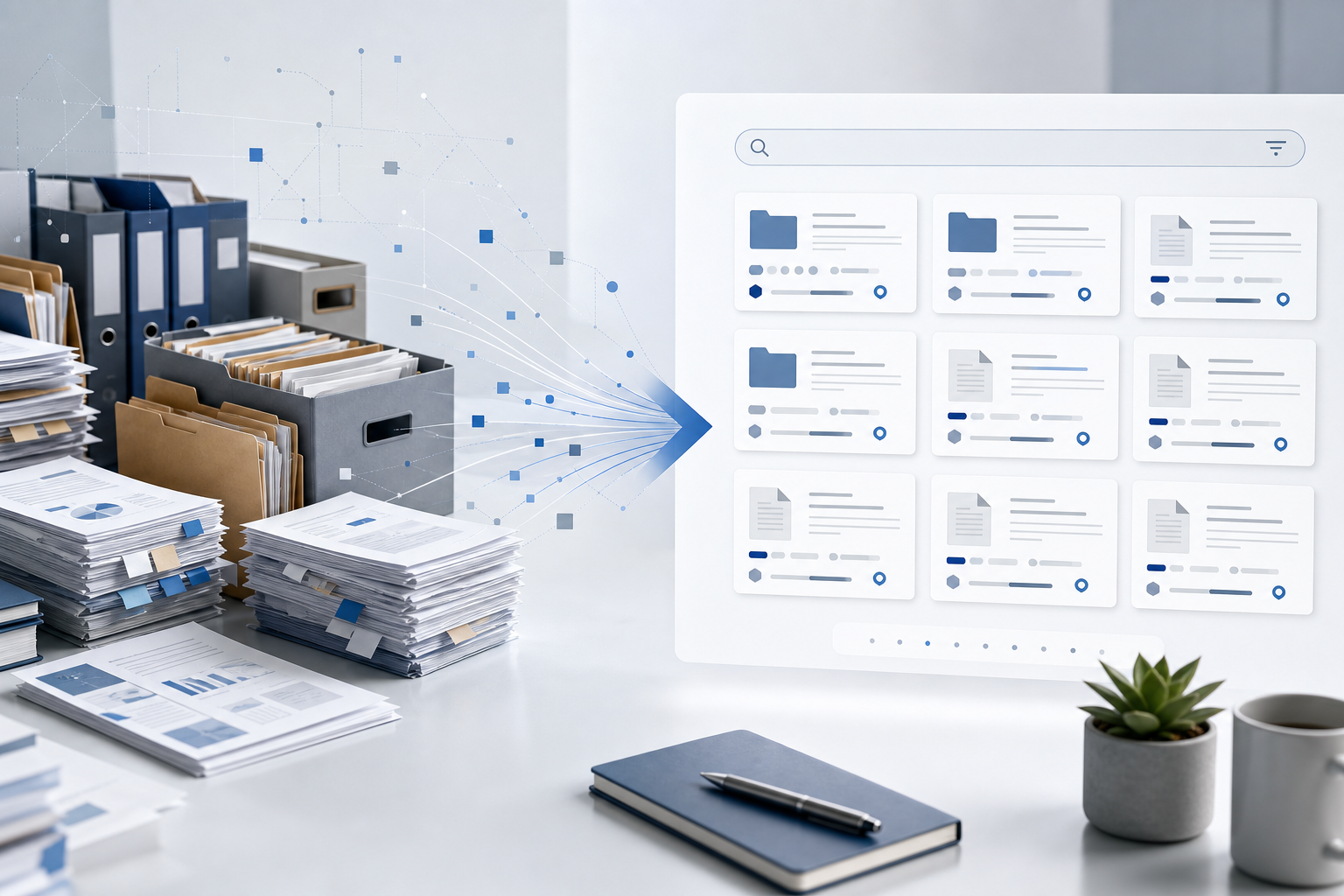
VIR Operating Memory
Turn the SharePoint project archive into structured, searchable project intelligence.
 02
02
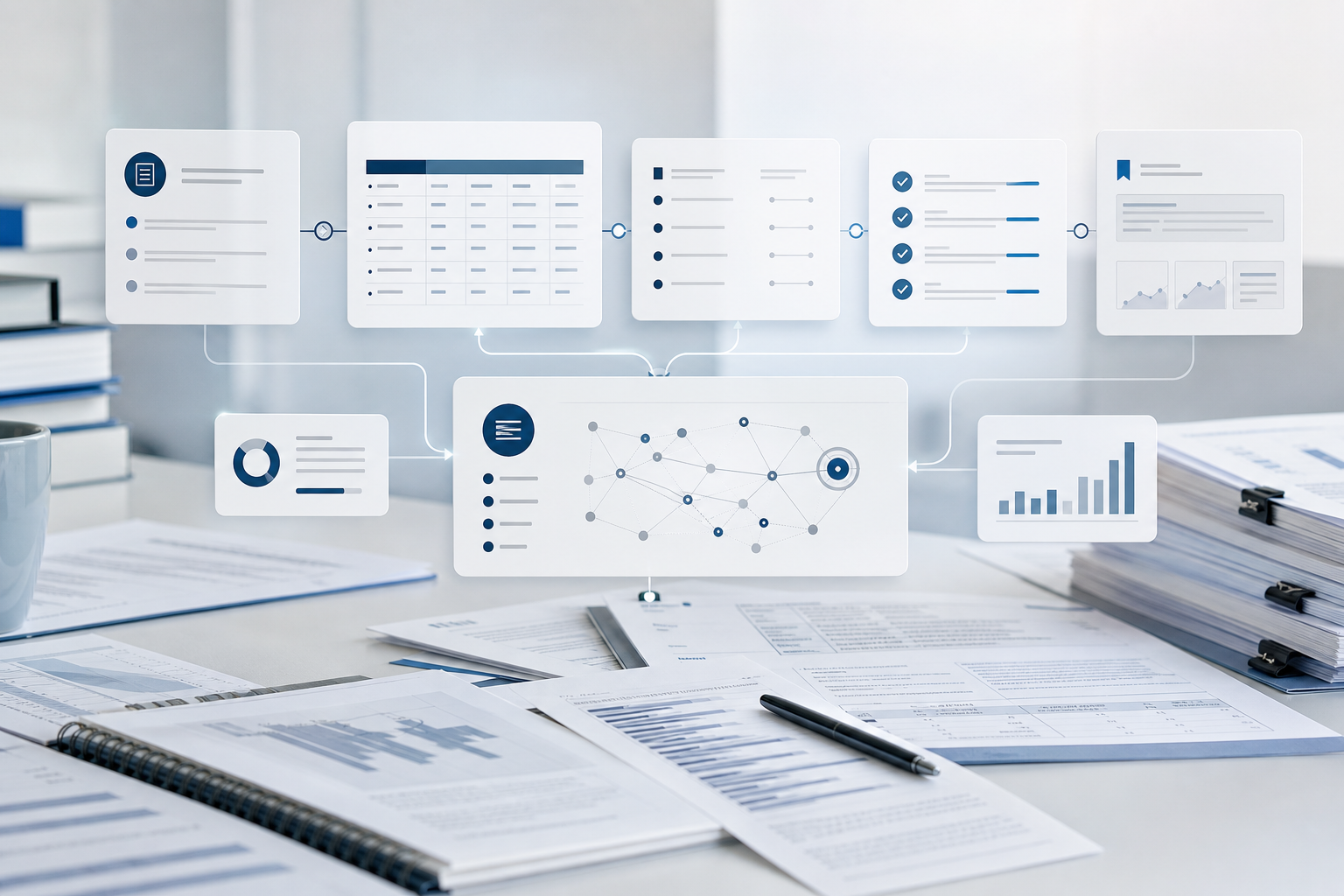
HEOR Commercial and Delivery Workbench
Support proposals, evidence work, assumptions, models, reports, and quality control.
 03
03
CRO Growth Wedge
Explore targeted support for trial start-up, submission, site activation, and TMF/QC.
Area 01
VIR Operating Memory
Turn VI's historical SharePoint project archive into usable business intelligence, while creating a future-proof way for every new project to be structured and searchable from day one.
Area 02
HEOR Commercial and Delivery Workbench
What would we do differently if every HEOR consultant had an unlimited bench of research assistants, analysts, reviewers, model checkers, writers, and project coordinators?
Start with bounded internal experiments that reduce production effort, improve reviewability, and preserve expert sign-off.
HEOR Intake + Scope Assistant
Turn rough client requests into structured briefs, missing questions, scope risks, assumptions, exclusions, work packages, and proposal outlines.
Success signal: faster proposal drafting and cleaner sales-to-delivery handoff.Evidence Table Builder
Create draft evidence tables with citations, page references, confidence scores, reviewer status, and evidence gaps.
Guardrail: human approval required for extracted values.Assumption Register
Capture assumptions, rationale, linked evidence, approval status, sensitivity scenarios, and reusable candidates.
Success signal: fewer undocumented assumptions and easier model/report review.Model-Report QC Assistant
Flag model/report mismatches, unsupported claims, missing references, anomalies, and consistency issues before final review.
Guardrail: flags only; it must not silently change models, reports, or claims.Internal HEOR Memory
Create searchable project memory, source libraries, assumption libraries, country libraries, model registry, and similar-project suggestions.
Success signal: less searching, more reuse, faster onboarding, reduced duplication.Area 03
CRO Growth Wedge
The strongest wedge is not an AI CRO. It is trial startup, submission, site activation, TMF/QC, and bilingual document workflow support: boring, document-heavy, auditable work where every output can be reviewed before use.
Trial startup + submission pack copilot
Protocol-to-checklist extraction, country pack builder, approval tracker, missing-doc alerts, and bilingual cover-letter/ICF support.
Site feasibility + investigator intelligence CRM
Map protocol eligibility to site capability, investigator history, patient-pool questions, and startup timelines.
Bilingual ICF and patient-material QA
Arabic/English concordance, plain-language review, risk/benefit consistency, glossary, change log, and reviewer workflow.
TMF/eTMF QC and audit-readiness assistant
Map TMF folders to expected index, detect missing or inconsistent documents, and produce audit-readiness reports.
Proposal/SOW estimator and assumptions library
Protocol synopsis to task list, country assumptions, timelines, risk flags, fees, site count, and change-order assumptions.
Reusable study knowledge base
Closeout interviews, lessons learned, country/site timelines, query patterns, template library, and source-date confidence notes.
Timeline and cost
Three focused workstreams, scoped before each starts.
Indicative timelines and costs for the proposed workstreams. Final scope should be confirmed before each workstream starts.
 Commercial plan
VIR Operating Memory
SharePoint archive mapping, structured project intelligence, and a reusable foundation for new project records.
HEOR Commercial and Delivery Workbench
Depends on selected scope: proposal support, evidence reuse, assumption registers, QC support, or internal HEOR memory.
CRO Growth Wedge
Focused first wedge around trial startup, submission, site activation, TMF/QC, or bilingual document workflow support.
Recommended decision
Approve a focused operating-memory discovery sprint.
The next move should be deliberately narrow: map what exists, agree the metadata language, test ownership and review workflows, and identify which HEOR or CRO use cases are worth building after the foundation is credible.
Proposal document
Download the full pitch for review.
The PDF contains the current proposal narrative, programme areas, timeline, and indicative pricing for the VIR operating-memory discovery sprint and related workstreams.
 03062026-PDO-Pitch.pdf
Download proposal PDF
03062026-PDO-Pitch.pdf
Download proposal PDF
1.9 MB document for circulation and review.